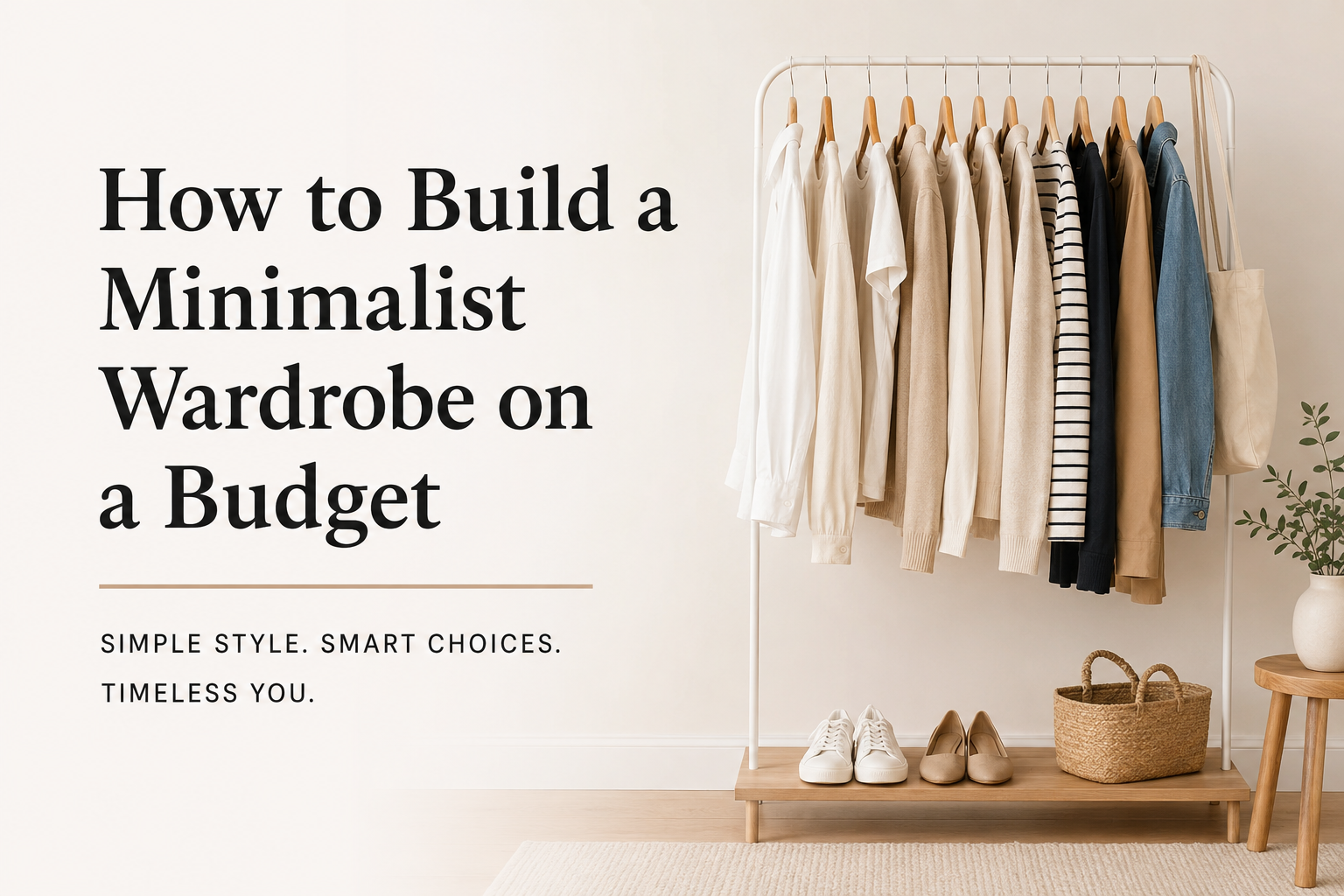
Building a minimalist wardrobe does not mean throwing away all your clothes and spending a lot of money on expensive basics. In my opinion, a minimalist wardrobe is more about being thoughtful about what I own and making sure that the clothes I keep are useful, comfortable, and easy to wear.
I used to think having more clothes meant having more choices. But over time, I realized that a crowded wardrobe can actually make getting dressed more difficult. When I have too many things that do not fit well together, I spend more time deciding what to wear. A smaller wardrobe with carefully selected pieces can make daily life much easier.
The good news is that building this kind of wardrobe does not have to be expensive. With some planning, patience, and smart shopping habits, I can create a simple wardrobe while staying within a reasonable budget.
Start With What You Already Own
The first thing I recommend is looking at the clothes you already have. Before buying anything new, take everything out of your wardrobe and examine each piece.
I ask myself a few simple questions. Do I wear this regularly? Does it fit comfortably? Do I like how I feel when I wear it? Can I combine it with other clothes I own? Is it still in good condition?
If the answer is no to most of these questions, the item may not deserve valuable space in my wardrobe.
I do not believe everything needs to be removed immediately. Sometimes I keep an item aside for a few weeks before making a final decision. This helps me avoid getting rid of something I might actually need.
The biggest advantage of starting with what I already own is that it costs nothing.
Understand Your Personal Style
A minimalist wardrobe works best when it reflects my actual lifestyle and personal taste. I do not need to copy someone else’s wardrobe just because it looks good in pictures.
For example, if I normally wear jeans, simple shirts, sneakers, and casual jackets, there is little reason to buy formal clothing that I rarely need.
I think about the activities I regularly do. Do I work from home? Do I go to an office? Do I attend university? Do I travel often? Do I need traditional clothing for family events?
Once I understand my lifestyle, it becomes much easier to decide what belongs in my wardrobe.
My goal is not to create a perfect wardrobe according to someone else’s rules. My goal is to create a wardrobe that makes sense for my everyday life.
Choose Versatile Clothing
When I am shopping on a budget, versatility is one of the most important things I consider.
A versatile piece can be worn in several different ways. For example, a simple shirt can work with jeans for a casual day or with trousers for a slightly more polished look.
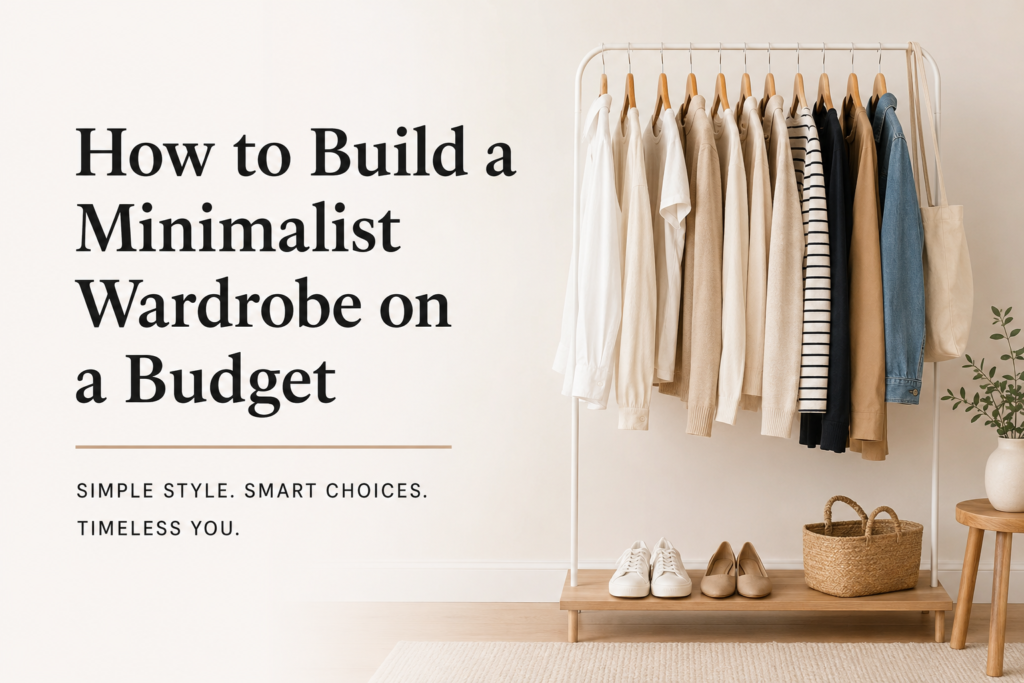
Neutral colors can also make clothing easier to combine. Colors such as black, white, gray, navy, beige, brown, and olive can work with many other shades.
This does not mean my wardrobe needs to be completely boring. I can still include colors and patterns that I enjoy. I simply make sure that most of my clothing can work together.
The more combinations I can create from one item, the more value I get from that purchase.
Build Your Wardrobe Slowly
One mistake I try to avoid is buying everything at once.
When I decide to build a minimalist wardrobe, I might feel tempted to make a large shopping trip and replace everything. However, this can quickly become expensive and can also lead to unnecessary purchases.
Instead, I prefer to build my wardrobe slowly.
I first identify the most important gaps. Maybe I need a comfortable pair of everyday shoes, a good pair of trousers, or a few simple shirts. I focus on those items first.
After a few weeks or months, I can see what else I genuinely need.
This approach makes the process more affordable and gives me enough time to understand my real clothing needs.
Set a Clothing Budget
A budget makes minimalist shopping much easier.
Before shopping, I decide how much money I can comfortably spend. I do not use money that I need for important expenses just to buy clothes.
I also find it useful to divide my budget into priorities. For example, I may spend more on something I will wear several times a week and less on something I will only wear occasionally.
A budget also helps me avoid impulse purchases. When I see something attractive in a store, I can ask myself whether it fits into my plan.
If I already have enough similar items, I usually leave it.
Shop During Sales Carefully
Sales can be helpful when building a wardrobe on a budget, but I do not consider every discount a good deal.
A cheap item that I never wear is still wasted money.
Before buying something during a sale, I ask myself whether I would want it at its normal price. I also check whether I actually need it.
I prefer sales for items that were already on my shopping list. This way, I am using the discount to save money instead of using the discount as a reason to spend money.
Consider Thrift and Secondhand Shopping
Secondhand shopping can be an excellent option for a budget friendly minimalist wardrobe.
Depending on where I live, thrift stores, local markets, resale platforms, and secondhand shops can offer useful clothing at much lower prices than new items.
I pay attention to condition, fabric quality, stitching, zippers, buttons, and signs of excessive wear.
The important thing is not to buy something simply because it is cheap. The same minimalist principle applies to secondhand shopping. I only want pieces that I will actually use.
Sometimes a simple secondhand shirt or jacket can become one of the most useful pieces in my wardrobe.
Pay Attention to Quality
When I am trying to save money, it can be tempting to choose the cheapest possible option. However, the lowest price does not always mean the best value.
I look for clothing that feels reasonably well made and can handle regular use.
I check the stitching and fabric and make sure buttons and zippers feel secure. I also think about how easy the item will be to wash and maintain.
I do not believe every item needs to be expensive. Affordable clothing can be useful when I choose carefully.
For me, the goal is to spend money on items that I expect to wear many times rather than buying several low cost items that quickly become unusable.
Choose a Simple Color Palette
A simple color palette can make a minimalist wardrobe much easier to manage.
I usually start with a few colors that work naturally together. Neutral colors are helpful because they can be mixed and matched easily.
For example, a white shirt can work with blue jeans, black trousers, beige pants, or a simple jacket.
Once the basic colors are established, I can add a few personal colors that I enjoy.
This approach means I do not need dozens of different pieces to create different outfits.
Avoid Trends That Do Not Suit You
Fashion trends can be fun, but I do not think every trend deserves a place in my wardrobe.
Some trends disappear quickly. If I buy something only because it is popular today, there is a chance I may stop wearing it later.
Instead, I prefer clothing that matches my personal style and feels comfortable.
This does not mean I completely ignore fashion. I simply choose trends carefully and avoid spending too much money on items that may have a short lifespan.
Take Care of Your Clothes
One of the easiest ways to save money is to make the clothes I already own last longer.
I follow the care instructions on clothing labels and avoid washing items unnecessarily. I also fold or hang clothes properly and repair small problems before they become bigger ones.
For example, replacing a missing button or fixing a small tear can be much cheaper than buying a new item.
Taking care of clothing also supports the minimalist idea because I can enjoy the same pieces for a longer period.
Use the One In, One Out Approach
Once my wardrobe becomes smaller and more organized, I try to avoid filling it again.
The one in, one out approach can help. If I buy a new shirt, I consider whether an older shirt should leave my wardrobe.
This does not need to be a strict rule for everyone. Sometimes I may genuinely need additional clothing. However, it gives me a simple reminder to think before adding something new.
It also helps prevent the cycle of constantly buying more clothes.
Give Yourself Time
Building a minimalist wardrobe is not something I need to complete in one weekend.
I think the best wardrobe develops naturally over time.
As I wear my clothes, I learn what I actually like, what fits my lifestyle, and what I never use. This information helps me make better decisions during future shopping trips.
I may discover that I need fewer clothes than I originally thought.
That realization can save both money and space.
Final Thoughts
For me, building a minimalist wardrobe on a budget is less about owning a specific number of clothes and more about becoming intentional with what I buy and keep.
I start with the clothes I already have, understand my lifestyle, choose versatile pieces, create a realistic budget, and shop slowly. I also look for secondhand options, pay attention to quality, and avoid buying things simply because they are discounted or fashionable.
A minimalist wardrobe does not need to look the same for everyone. Someone may need more work clothes, while another person may prefer casual clothing. What matters is that the wardrobe supports the person’s real life.
The biggest lesson I have learned is that I do not need more clothes to have more outfit choices. I need better combinations and pieces that I genuinely enjoy wearing.
When I buy less but choose more carefully, I can save money, reduce clutter, and make getting dressed much simpler. That is what makes a minimalist wardrobe practical for me, especially when I am trying to build one without spending a lot of money.