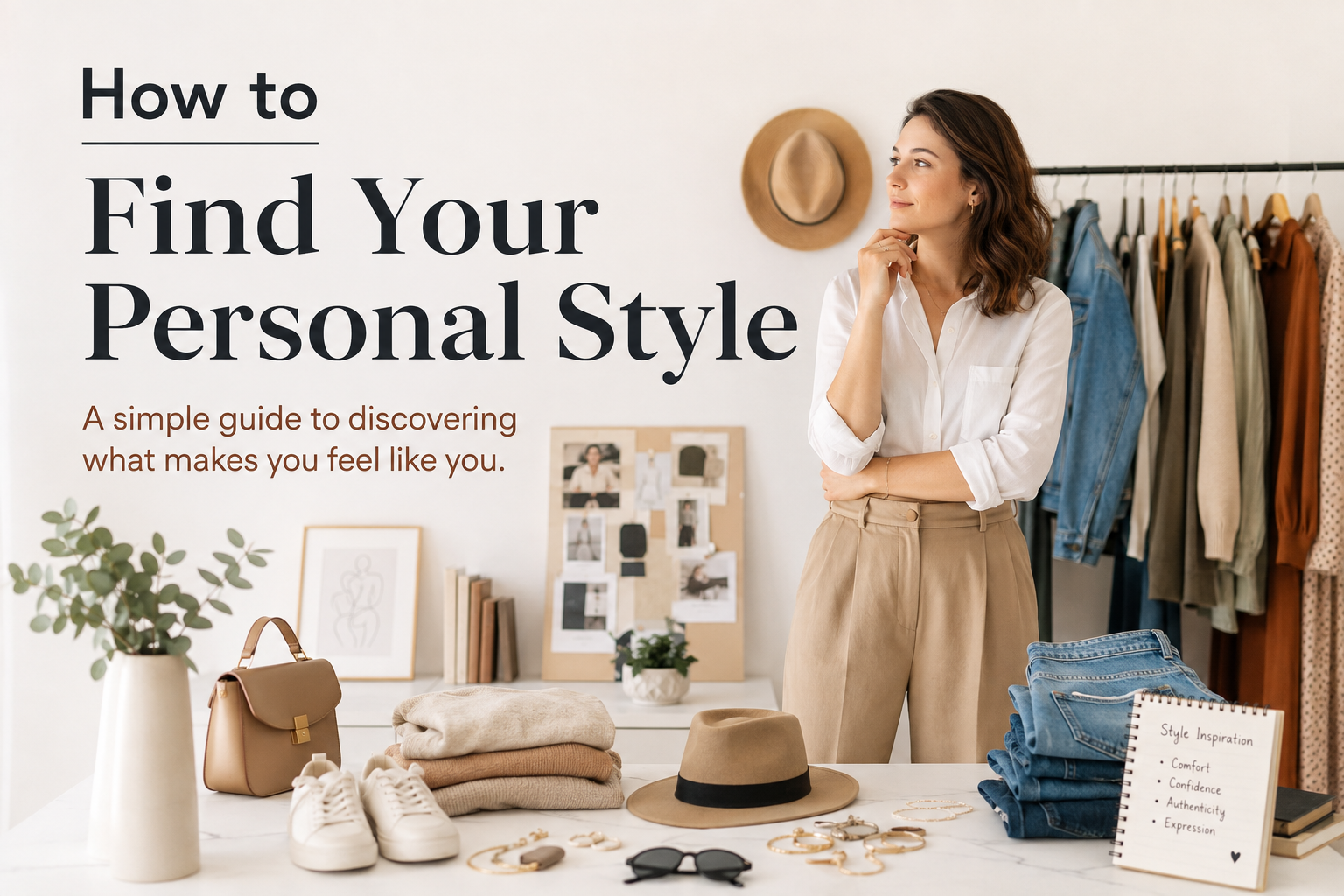
Finding your personal style can completely change the way you feel about getting dressed. In my opinion, personal style is not about wearing expensive clothes, following every fashion trend, or trying to look like someone else. It is about understanding what you like, what makes you comfortable, and what helps you feel confident when you look in the mirror.
I used to think that having good style meant knowing exactly what was fashionable. Over time, I realized that fashion and personal style are two different things. Fashion changes all the time, but personal style is much more connected to who you are. You can take inspiration from current trends, but you do not have to follow everything you see.
If you are trying to discover your personal style, you do not need to completely replace your wardrobe. You simply need to pay more attention to yourself, your preferences, your lifestyle, and the clothes that make you feel your best.
Start by Looking at What You Already Wear
The easiest way to discover your personal style is to look at your existing wardrobe. Instead of immediately buying new clothes, I recommend taking some time to understand what you already own.
Look through your clothes and notice the pieces you wear most often. Ask yourself why you like them. Maybe you like certain colors, comfortable fabrics, simple designs, loose fits, or classic shapes.
You may also notice patterns. Perhaps most of your favorite clothes are neutral colors. Maybe you always choose jeans and simple shirts. Or maybe you enjoy colorful dresses and interesting accessories.
Your favorite clothes can tell you a lot about your personal style.
I think this is one of the most useful steps because your wardrobe already contains clues about what you naturally enjoy wearing.
Think About How You Want to Feel
Personal style is not only about appearance. It is also about how your clothes make you feel.
When I choose an outfit, I want to feel comfortable and confident. Someone else may want to feel elegant, creative, relaxed, professional, or energetic.
Think about the feeling you want your clothes to create.
Do you want to look polished?
Do you prefer a relaxed appearance?
Do you enjoy looking modern and simple?
Do you want your clothes to show your creative personality?
There is no right or wrong answer. Your style should match your personality rather than someone else’s expectations.
Once you understand how you want to feel, choosing clothes becomes much easier.
Find Colors You Naturally Like
Color can have a major influence on personal style. You do not need to know complicated color theory to discover what works for you.
Start by looking at the colors you already wear. Which ones make you feel comfortable? Which colors do you receive compliments on? Which colors do you naturally choose when shopping?
Some people love neutral shades such as white, black, beige, gray, and navy. Others prefer bright colors such as red, green, blue, or yellow. Some people enjoy a combination of both.
I personally think it is useful to have a few basic colors that work together and then add other colors when you want more variety.
You can also experiment. Try wearing a color you normally avoid and see how you feel. Personal style develops through experimentation, so do not be afraid to try something different.
Pay Attention to Clothing Fit
The way clothing fits your body can be just as important as the design itself.
A simple outfit can look excellent when the clothes fit well. At the same time, an expensive outfit may not look good if the fit is uncomfortable or unsuitable.
This does not mean that every item needs to be tight or perfectly tailored. Some people prefer oversized clothing, while others feel better in structured pieces. The important thing is finding proportions that make you feel comfortable and confident.
Try different fits and pay attention to how you feel while moving around.
You may discover that you prefer relaxed shirts, straight leg trousers, high waisted jeans, long coats, or fitted jackets. These small discoveries can become important parts of your personal style.
Create a Style Inspiration Collection
Another method I find helpful is collecting outfit ideas.
You can save pictures of outfits that catch your attention from fashion websites, magazines, social media, or other places. You do not have to copy these outfits exactly. The purpose is to identify patterns in the things you like.
After collecting several examples, look at them together.
You may notice that many outfits have similar colors, shapes, fabrics, or accessories. Perhaps you repeatedly save simple outfits with sneakers. Maybe you prefer elegant outfits with neutral colors. Or maybe you are attracted to vintage inspired clothing.
These patterns can help you understand your style preferences.
The important thing is to focus on what you genuinely like instead of saving something simply because it is popular.
Consider Your Lifestyle
Your personal style needs to work with your everyday life.
There is no point creating a wardrobe filled with formal clothing if you spend most of your time in casual environments. Similarly, if you work in a professional environment, you may need clothing that looks appropriate for work.
Think about where you spend most of your time.
Do you work from home?
Do you attend school or university?
Do you work in an office?
Do you spend a lot of time outdoors?
Do you frequently attend social events?
Your answers should influence your wardrobe.
For me, practical clothing is important because clothes should not only look good. They should also make everyday life easier.
Do Not Try to Copy Someone Completely
Inspiration is helpful, but copying another person’s entire style can make you feel uncomfortable.
You may see someone online and love everything they wear. However, their lifestyle, personality, body shape, budget, and preferences may be completely different from yours.
Instead of asking, “How can I dress exactly like this person?” ask, “What do I like about this outfit?”
Maybe you like the color combination. Perhaps you like the shoes, jacket, accessories, or overall simplicity.
Take that individual idea and adapt it to yourself.
That is how inspiration becomes personal style.
Experiment Without Spending Too Much
You do not need a large shopping budget to discover your style.
In fact, I recommend experimenting with the clothes you already have before buying many new items.
Try combining pieces in different ways. Wear a shirt differently. Layer clothing. Change your shoes. Add an accessory. Try a different hairstyle with the same outfit.
Sometimes an item you rarely wear can become one of your favorite pieces when styled differently.
If you decide to buy something new, start with one item rather than purchasing an entirely new wardrobe. This allows you to learn what works before spending too much money.
Build a Simple Wardrobe Foundation
Once you understand your preferences, you can slowly create a wardrobe that reflects your style.
A useful foundation might include comfortable trousers, a few versatile tops, a jacket or sweater, everyday shoes, and a few accessories.
The exact pieces depend on your lifestyle and preferences.
I believe versatility is extremely useful. A good item should work with several other pieces in your wardrobe. This gives you more outfit options without requiring hundreds of clothes.
You can then add statement pieces when you discover what you truly enjoy.
Learn What You Do Not Like
Finding personal style is also about discovering what does not work for you.
Sometimes we buy something because it looks great in a store or on another person. Later, we realize that we never want to wear it.
Instead of considering this a failure, treat it as useful information.
Maybe you discover that you do not like certain fabrics. Maybe you dislike uncomfortable shoes or overly complicated outfits. Perhaps bright colors do not make you feel confident.
Every one of these discoveries helps you understand yourself better.
Over time, shopping becomes easier because you know what to avoid.
Ignore the Pressure to Follow Every Trend
Fashion trends can be fun, but I do not think you need to follow every trend.
Something can be extremely popular and still not suit your personality.
When I see a new trend, I prefer to ask myself whether I genuinely like it. If I do, I may experiment with it. If I do not, I simply leave it alone.
Your wardrobe should not constantly change because fashion companies introduce something new.
A strong personal style allows you to enjoy trends without becoming dependent on them.
Give Yourself Time
Personal style does not usually appear overnight.
Your preferences can change as your lifestyle, confidence, interests, and circumstances change. Something you loved a few years ago may no longer feel right, and that is completely normal.
I think the best approach is to stay curious.
Try different combinations. Pay attention to what makes you feel good. Learn from your mistakes. Keep the pieces you genuinely love and slowly remove things that no longer represent you.
With time, you will probably notice that getting dressed becomes easier.
Final Thoughts
Finding your personal style is really about getting to know yourself.
You do not need designer clothes, a huge wardrobe, or unlimited money. You simply need to understand what you like and what makes you feel comfortable and confident.
Start with the clothes you already own. Pay attention to your favorite colors, fits, fabrics, and outfits. Look for inspiration, but do not copy other people completely. Consider your lifestyle and experiment before spending money.
Most importantly, remember that personal style belongs to you.
There is no single definition of good style. The best outfit is often the one that feels natural, comfortable, and authentic to the person wearing it.
In my view, the moment you stop dressing to impress everyone else and start dressing in a way that feels true to you, you begin to discover your real personal style.