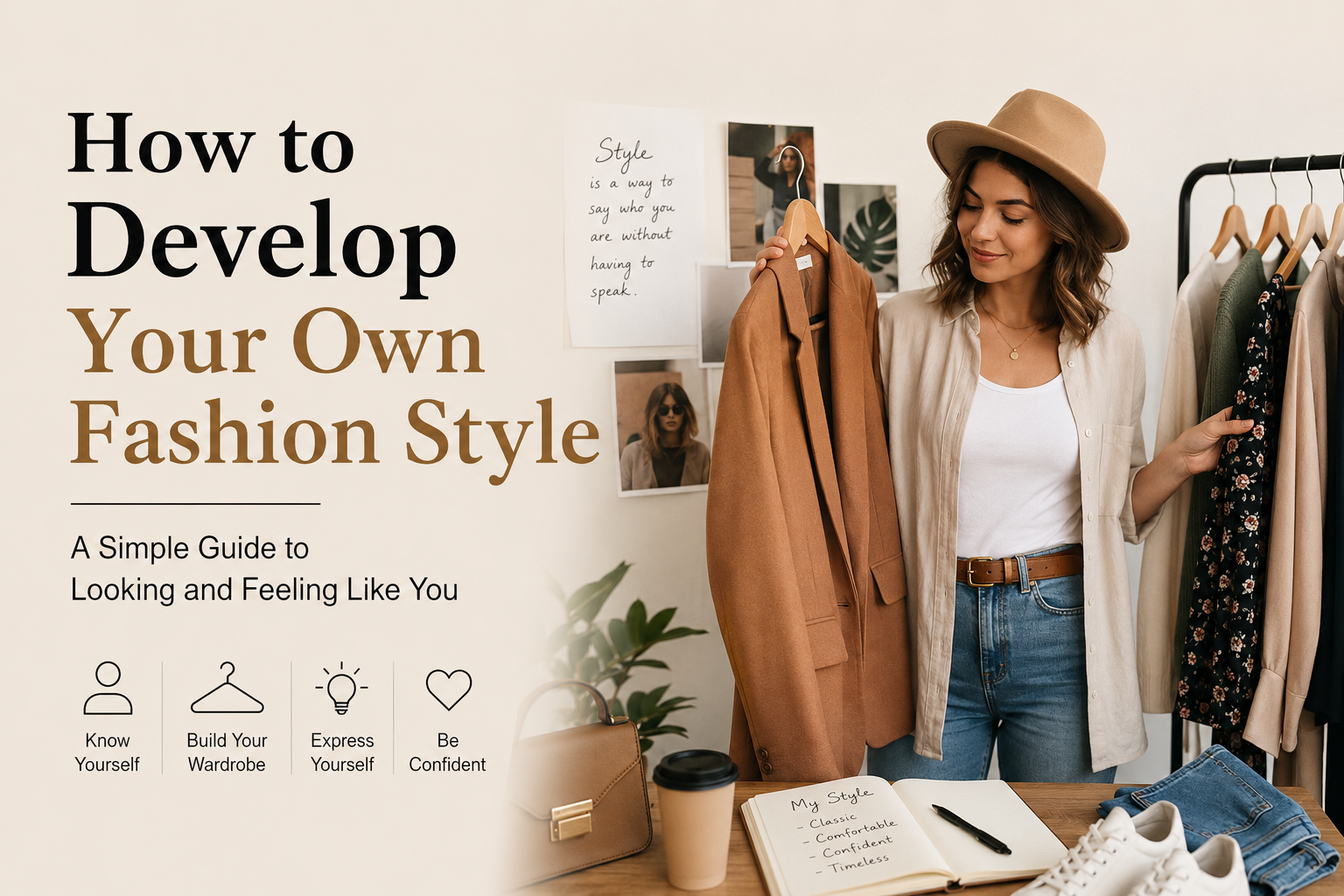
Fashion is something I believe should feel personal. We all see different outfits on social media, in magazines, on celebrities, and even on people around us. Sometimes we like what we see and immediately want to try the same look. There is nothing wrong with getting inspiration from other people, but I think personal style becomes much more meaningful when it reflects who we really are.
Developing your own fashion style does not mean buying expensive clothes or following every new trend. For me, it is more about understanding what I like, what makes me comfortable, and what helps me feel confident. Your style can be simple, colorful, classic, modern, casual, elegant, or a mixture of several different looks. The important thing is that it feels like you.
Start by Understanding What You Like
The first step I would recommend is simply paying attention to your own preferences. Before buying anything new, think about the clothes you already enjoy wearing.
Look through your wardrobe and notice which pieces you choose most often. Maybe you always reach for comfortable jeans and simple shirts. Maybe you love dresses, jackets, sneakers, or traditional clothing. These choices can tell you a lot about your natural style.
I also think it is useful to notice the colors you repeatedly choose. If most of your clothes are black, white, beige, navy, or gray, you may naturally prefer a neutral wardrobe. If you enjoy bright colors, patterns, or unusual combinations, your style may be more expressive.
You do not have to give yourself a fashion label immediately. Simply observe yourself and understand what you naturally enjoy.
Find Inspiration Without Copying Others
Inspiration is one of the easiest ways to discover your own style. I often think that seeing different outfits can help us understand what we like and what we do not like.
You can save pictures of outfits from fashion websites, social media, magazines, or anywhere else you find interesting. After collecting several images, look for patterns.
Perhaps you notice that you repeatedly save outfits with relaxed shirts, straight trousers, neutral colors, and simple shoes. Or maybe you keep choosing outfits with colorful dresses, accessories, and interesting patterns.
The goal is not to copy an entire outfit. Instead, take small ideas from different looks and combine them in a way that feels natural to you.
I believe this is much better than trying to become a copy of someone else. Your lifestyle, body shape, personality, budget, and daily routine are different, so your final style should be different too.
Learn What Looks Good on You
Understanding your body and proportions can make dressing much easier. This does not mean you need to change your body to fit fashion. I believe clothing should work for your body rather than making you feel pressured to change yourself.
Try different cuts, lengths, and shapes to discover what you personally enjoy. Some people prefer loose clothing because it feels comfortable. Others like structured jackets or fitted pieces because they create a polished appearance.
Experiment with different styles instead of assuming something will not look good on you.
Try wide leg trousers, straight leg jeans, oversized shirts, fitted tops, long coats, short jackets, different dress shapes, and different necklines. You may discover that something you never considered actually becomes one of your favorite styles.
The most important thing is how you feel when wearing it.
Build a Wardrobe Around Basics
In my opinion, having a few reliable basics makes developing personal style much easier. Trendy pieces can be fun, but basic clothing gives you something to build outfits around.
Depending on your lifestyle, useful basics might include a comfortable pair of jeans, plain shirts, simple trousers, a versatile jacket, comfortable shoes, and a few pieces that can easily be dressed up or down.
The exact items will be different for everyone. Someone who works in an office may need more formal clothing, while someone who works from home may prefer casual pieces.
I would rather have a smaller wardrobe filled with clothes I actually wear than a closet full of things I rarely choose.
When your basic pieces work well together, creating outfits becomes much easier.
Choose Colors You Enjoy
Color can completely change the feeling of an outfit. Developing your own color preferences can therefore be an important part of finding your style.
Start with colors you already feel comfortable wearing. You can build a simple base around neutral colors and then add one or two colors that you really enjoy.
For example, a wardrobe based on black, white, beige, and denim can easily be changed with green, blue, red, pink, or another favorite color.
You do not have to follow complicated color rules. Fashion should be enjoyable. Try combinations in front of a mirror and see what makes you feel good.
Sometimes unexpected combinations look better than we imagine.
Do Not Follow Every Trend
Fashion trends can be exciting, but I do not think every trend deserves a place in your wardrobe.
A trend may look amazing on someone else but feel completely wrong for you. That is perfectly normal. You do not have to buy something simply because everyone else is wearing it.
Before purchasing a trendy item, I like to ask myself whether I genuinely like it and whether I can imagine wearing it several months from now.
If the answer is yes, then it may be worth considering. If I only want it because I have seen it everywhere, I would probably wait.
Personal style becomes stronger when you choose trends selectively rather than allowing trends to control your entire wardrobe.
Pay Attention to Accessories
Accessories are a simple way to make an outfit feel more personal. A basic outfit can look completely different with the right bag, watch, belt, scarf, jewelry, hat, or pair of shoes.
You do not need dozens of accessories. A few pieces that you genuinely love can become part of your signature style.
For example, someone might always wear a simple watch. Another person may love earrings or necklaces. Someone else may prefer a particular type of handbag or sneakers.
These small details can make your outfits feel more intentional.
I think accessories are especially useful when your clothes are simple because they allow you to add personality without changing your entire wardrobe.
Dress for Your Lifestyle
One mistake I think people often make is developing a style that looks good in theory but does not work with their real life.
If you spend most of your day walking, you probably need comfortable shoes. If your work requires formal clothing, your wardrobe should include suitable professional pieces. If you attend many casual gatherings, everyday outfits may be more important than formal clothes.
Your fashion style should support your lifestyle rather than make your daily life difficult.
There is no point having a beautiful outfit that you never wear because it is uncomfortable or unsuitable for your routine.
For me, practical clothing becomes much more valuable when it also looks good.
Experiment With Your Style
Finding personal style is not something you have to complete in one week. It is a process.
Try combinations you have never worn before. Mix casual and formal pieces. Change your shoes. Add an accessory. Try a different color. Wear a jacket over an outfit you normally wear without one.
Some experiments will work and others will not. That is part of the process.
I think the outfits that do not work can actually teach us a lot. They help us understand what we dislike, which can be just as useful as knowing what we love.
Do not be afraid of making fashion mistakes. Nobody develops a personal style without trying different things.
Shop With a Plan
Once you understand your style better, shopping becomes easier. Instead of buying random clothes whenever you see something attractive, think about what your wardrobe actually needs.
Before buying an item, ask yourself a few simple questions.
Does it fit comfortably? Does the color work with clothes I already own? Can I create several outfits with it? Do I genuinely like it? Would I wear it regularly?
If an item only works with one particular outfit, it may not be the best purchase unless you specifically need it.
I believe thoughtful shopping saves money and also helps create a wardrobe that feels more consistent.
Take Care of Your Clothes
Personal style is not only about buying clothes. Taking care of what you already own is equally important.
Follow the washing instructions when possible. Store clothing properly and repair small problems instead of immediately replacing an item.
Clean and well maintained clothing usually looks better, even when the pieces themselves are simple.
I have found that taking care of clothes also makes me appreciate them more. When I know I have invested time and money into something, I am more likely to wear it carefully and keep it for longer.
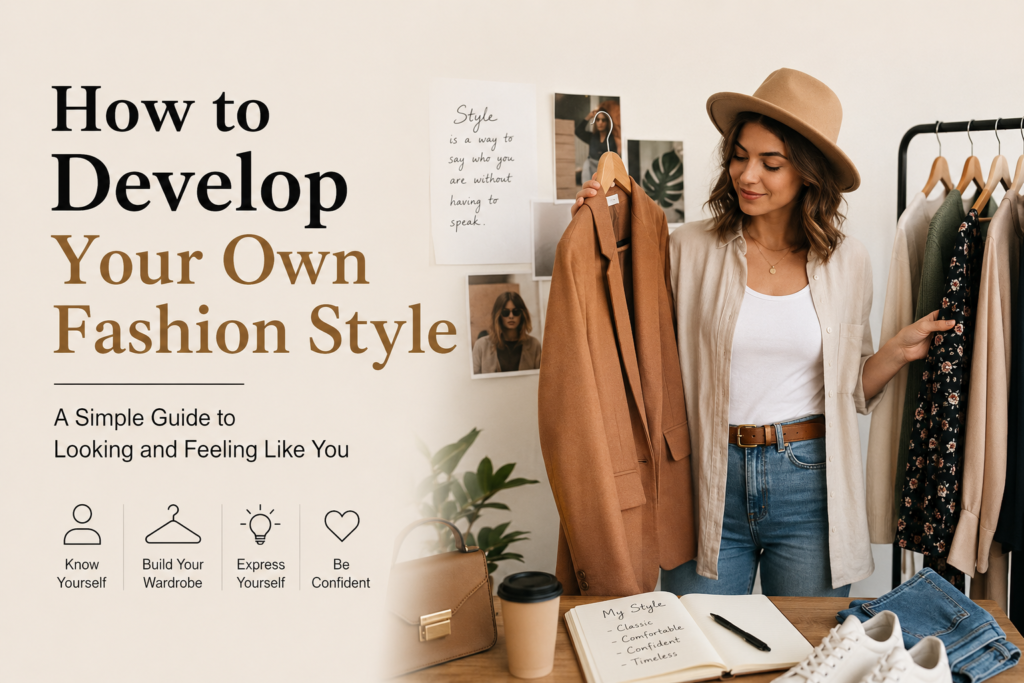
Confidence Makes the Biggest Difference
In my opinion, confidence is one of the most important parts of personal style.
You can wear expensive clothing and still feel uncomfortable if you are constantly wondering what other people think. On the other hand, a simple outfit can look excellent when the person wearing it feels comfortable and confident.
Do not wait for someone else to approve your style.
If you love a particular outfit and feel good wearing it, that matters. Fashion is a form of self expression, so there should be room for individuality.
Your style does not need to impress everyone. It needs to make sense to you.
Let Your Style Change
Another thing I have learned about fashion is that personal style does not have to remain exactly the same forever.
Your lifestyle can change. Your interests can change. Your confidence can change. Even your favorite colors can change.
You might love one style today and discover something completely different next year.
I think this is one of the most enjoyable parts of fashion. You are allowed to grow and change.
Do not feel trapped by a label such as classic, casual, minimalist, streetwear, or elegant. These descriptions can be useful, but they do not have to define you permanently.
Final Thoughts
Developing your own fashion style is really about discovering yourself through clothing. You do not need a huge wardrobe, expensive brands, or a perfect understanding of fashion.
Start by noticing what you naturally like. Look for inspiration, experiment with different clothes, learn what makes you comfortable, choose colors you enjoy, and build your wardrobe around pieces that fit your lifestyle.
Most importantly, give yourself permission to make mistakes and change your mind.
I believe great personal style is not about wearing the most fashionable outfit in the room. It is about wearing something that feels natural, comfortable, and true to who you are.
When you stop trying to dress exactly like everyone else and start paying attention to your own preferences, fashion becomes much more enjoyable. Over time, your choices become clearer, your wardrobe becomes easier to manage, and your outfits begin to feel like a genuine reflection of your personality.
That is when I think you know you have started developing your own fashion style.